



Renewables
Air source heat pump and cylinder installation
Replacing existing heating with a lower-carbon air source heat pump, including hot water.

Lower-carbon heating and hot water for Cotswold homes - with Boiler Upgrade Scheme grants of £7,500, or £9,000 for oil and LPG homes, handled for you.
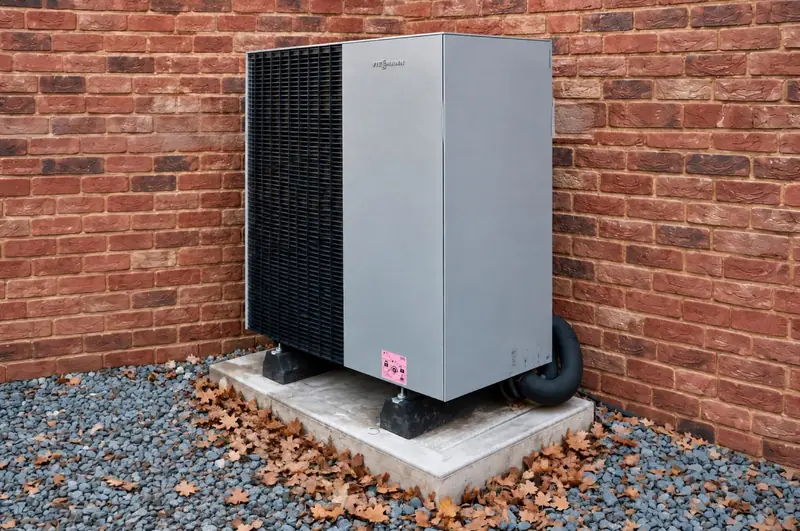
It works like a fridge in reverse - moving heat from the air outside into your home.
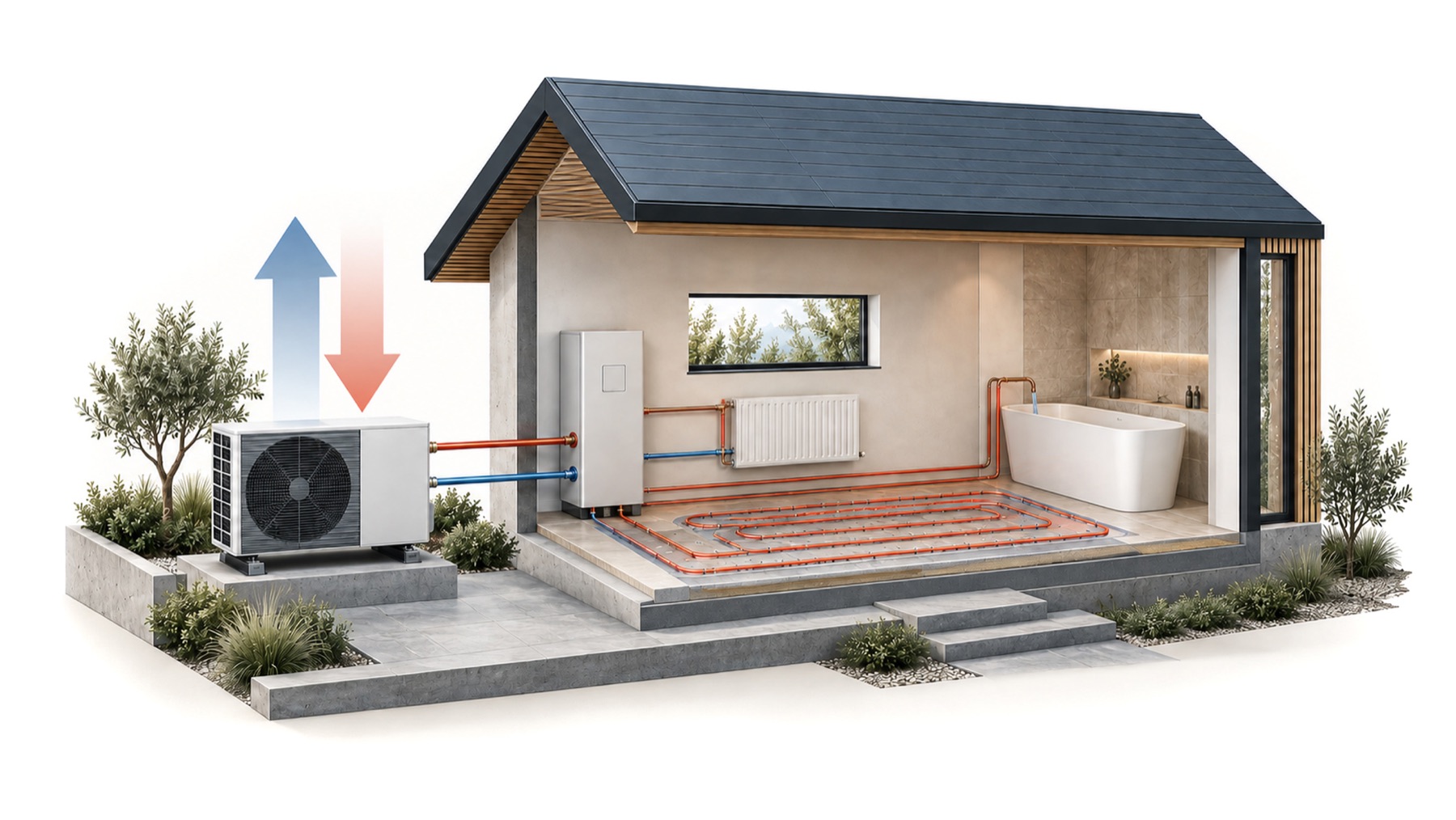
A fan draws outside air over a coil containing refrigerant, which absorbs heat - even on cold winter days.
A compressor increases the pressure of the refrigerant, which raises its temperature further.
That heat is passed to water in your heating system through a heat exchanger.
The warm water runs through radiators or underfloor heating, and heats a hot water cylinder for taps and showers.
Underfloor heating uses the kind of gentle heat that a heat pump is best at producing, allowing them to work together efficiently.
Underfloor heatingOften outlasts a gas boiler, with less to go wrong since there's no combustion involved.
No gas standing charge, and running costs keep falling as electricity gets cheaper relative to gas.
An EPC boost and a heating system built for where energy policy is heading, not where it's been.
Get £7,500 off installation through the Boiler Upgrade Scheme, or £9,000 if you're replacing oil or LPG, handled for you.
Modern air source units run at around 40-60dB, about the same as a boiler.
Working efficiently whatever the weather.
One less thing on your annual maintenance list.
Heat pumps can reduce your home's carbon emissions by up to 45% compared to a gas boiler, more once the UK grid gets greener.
The government's Boiler Upgrade Scheme gives grants towards replacing fossil-fuel heating with a low-carbon system in England and Wales. The grant is taken off the cost of your installation - you don't need to claim it yourself.
Only MCS-certified installers can apply for the grant, we can handle the application for you.
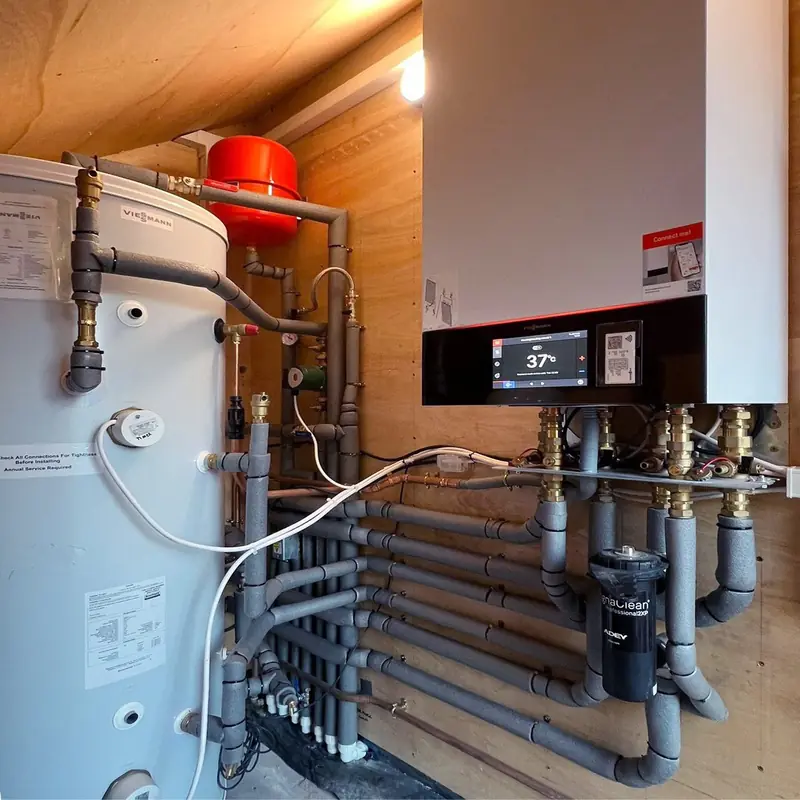
As an MCS-certified installer, we can apply the government's Boiler Upgrade Scheme grant directly to your air source heat pump installation - we handle the paperwork.
An air source heat pump can heat your home and hot water all year round with a much lower carbon footprint than oil, LPG or gas. But getting the best from one depends on good design - the right size of heat pump, radiators or underfloor heating that suit it, and a properly set-up system.
As MCS-certified installers and RECC members, we survey, design, install and commission your system, and manage the grant application on eligible installs.
Is my home suitable?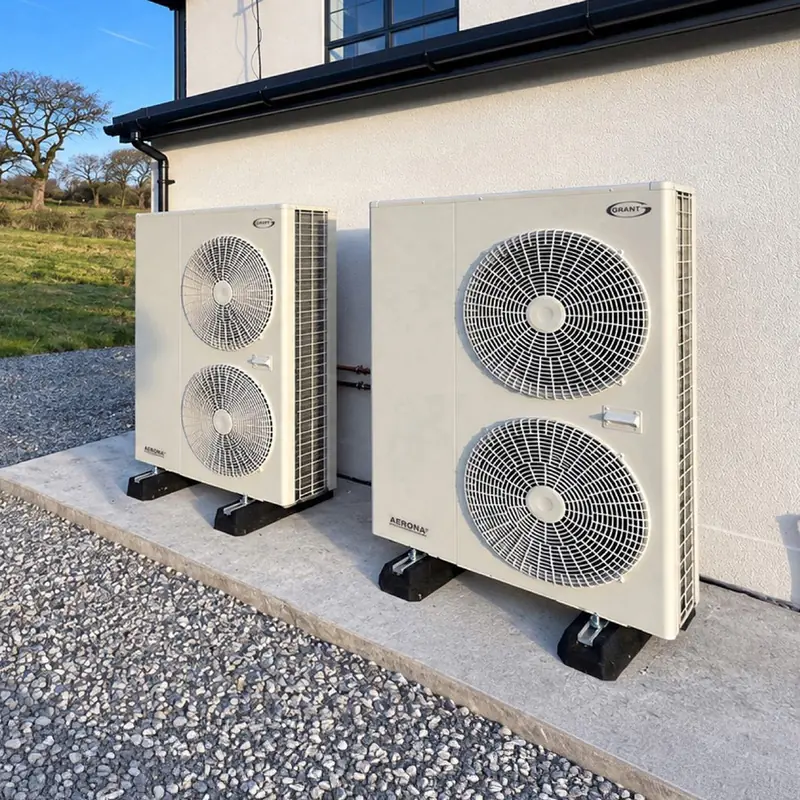
Straight-up reassurance on who's installing your system.

The Microgeneration Certification Scheme is the quality standard for renewable heating installations. MCS-certified installers are assessed on how they design and install systems - and an MCS installation is required to claim the Boiler Upgrade Scheme grant.


The Renewable Energy Consumer Code is approved by the Chartered Trading Standards Institute. Members commit to clear information, fair contracts and protection for your deposit, with access to independent dispute resolution if something goes wrong. Our RECC member number is 00079771.
Most homes can have a heat pump, including older properties - but it pays to check. Our survey looks at:
We can advise on what's needed and whether a heat pump is right for you.
Book a heat pump survey
Ground source heat pumps take heat from the ground through buried pipework. They suit properties with enough land, and are also eligible for a Boiler Upgrade Scheme grant.
Ask about ground source →Air-to-air systems heat and cool rooms directly, and can qualify for a £2,500 grant.
Air conditioning →Heat pumps need a hot water cylinder to store hot water. We supply and install cylinders sized for your household.
Get a quote →Underfloor heating runs at low temperatures, making it a natural partner for a heat pump.
Underfloor heating →See how we've installed air source heat pumps, cylinders and underfloor heating for homes across the area.
Replacing existing heating with a lower-carbon air source heat pump, including hot water.
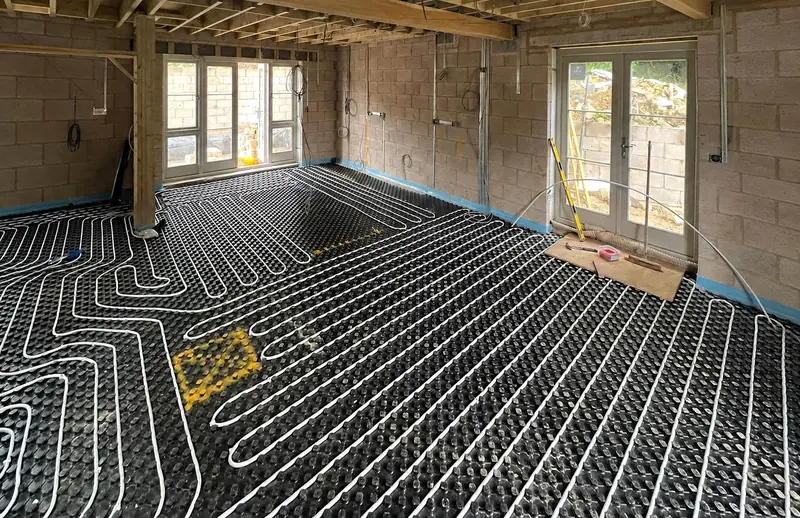
Underfloor heating throughout the ground floor of a new-build home, ready for a low-temperature heat source.
Modern heat pumps are designed to run quietly - many are similar to a fridge or a quiet conversation when running. We'll choose a sensible spot for the outdoor unit, away from bedrooms and neighbours where possible.
Yes. Air source heat pumps are designed to keep extracting heat from the air well below freezing. A correctly sized system, designed from a proper heat loss calculation, will keep your home warm through winter.
Yes - underfloor heating is an ideal partner because it runs at lower temperatures, which helps a heat pump work efficiently. See our underfloor heating page.
Sometimes. Heat pumps run at lower temperatures than boilers, so some rooms may need larger radiators to stay warm. Our survey calculates the heat each room needs and tells you exactly what, if anything, should change.
In England, many domestic air source heat pumps are permitted development, provided certain conditions are met - for example on siting and noise. Listed buildings and conservation areas can have extra rules. We'll check this during your survey.
Across the UK, a typical air source heat pump installation costs somewhere between £10,000 and £18,000 before the grant, with most landing around £13,000. The Boiler Upgrade Scheme grant comes straight off that figure: £7,500 for most homes, or £9,000 if you currently heat with oil or LPG and have no mains gas connection. That puts the amount most homeowners actually pay somewhere between £4,000 and £8,500. What moves the figure is the size of your home, whether any radiators or pipework need changing, and where the outdoor unit can go. We give you a fixed price after the survey, with the grant already applied.
A heat pump typically produces around three units of heat for every unit of electricity it uses, and a well designed system does better than that. Against mains gas, running costs usually come out similar or slightly lower, and the gap widens if you move to one of the electricity tariffs aimed at heat pump owners. Against oil or LPG, the saving is clearer. How well your home holds heat and how carefully the system is set up matter more than the badge on the unit, which is why we size everything from a room-by-room heat loss calculation rather than a rule of thumb.
Most installations take two to four days on site, after a heat loss survey that takes a few hours on an earlier visit. That covers siting the outdoor unit, fitting the cylinder and controls, any pipework or radiator changes, and commissioning the system. You will be without heating and hot water for part of that, and we will tell you exactly when, so you can plan around it.
Yes, a valid EPC is needed for the property. What you do not need is insulation work done first. The old rule requiring an EPC with no outstanding loft or cavity wall insulation recommendations was dropped in May 2024, though plenty of websites still say otherwise. Insulation will still make your heat pump cheaper to run, so it is worth doing on its own merits, but it is no longer a condition of the grant. We check your EPC as part of the survey.
Usually not. A heat pump runs at a lower temperature than a boiler, so it needs a cylinder with a larger coil and more stored volume to heat water efficiently. As a rough guide, a three bedroom house usually needs around 200 litres. If you currently have a combi boiler and no cylinder at all, you will need both the cylinder and somewhere to put it, which is the thing that most often surprises homeowners. We identify the space at survey stage, before you commit to anything.
You do not apply yourself. Only MCS certified installers can submit a Boiler Upgrade Scheme application, so we handle the paperwork, claim the grant and take it off your invoice. Vouchers are time limited, typically three months for an air source heat pump, which sits comfortably inside our normal lead times. One grant is available per property.
Yes, once a year, the same as a boiler. There is no combustion, so no flue and no gas safety check, but an annual service keeps the system running efficiently and, importantly, keeps the manufacturer warranty valid. Most manufacturers can and do ask for proof of servicing if you make a claim. A well maintained heat pump should last around twenty years, comfortably longer than a gas boiler.
 Louise Adams
April 2026
"Dan and the team did an absolutely fabulous job of renovating our main bathroom. They were friendly, professional, polite and worked amazingly hard. Dan made the whole process really easy as he project managed everything. I highly recommend him for anyone that wants bathroom renovations / plumbing work. Just beware - he does such a good job, you’ll want him to do every bathroom in every house you ever own!"
Kate Jones
September 2025
"Dan project managed and fitted a complete renovation of an en-suite shower room and downstairs cloakroom. Everything was super clear, from pricing to schedule, and all work was very tidy with brilliant attention to detail. I am beyond delighted with the results and would recommend him 100%. (Just don't book him until he's been back to do my main bathroom!) Thanks again Dan and team, brilliant job all round."
Dympna Ingram
August 2026
"I can't praise Dan and his team more highly. They fitted a complete new heating system for me whilst I was away, as well as doing a few small plumbing jobs around the house. A perfect installation and a tidy home when I got back,. What more can you ask? Perfect! Great value too. I can't recommend them more highly."
Adam
July 2026
"Dan is my go to person for all plumbing and heating jobs. From annual services to moving radiators. Most recently he's installed an additional outside tap, being flexible alongside the timing of the landscapers and going the extra mile to hide the pipework despite the extra effort. A very nice job."
Jack Nicholls
June 2026
"Dan has done multiple jobs for us over the years, all to a very high standard. He consistently goes the extra mile and delivers exactly what he says he will. His advice is always honest, and he never pushes unnecessary work. Can’t recommend him highly enough."
Cathy Casey
September 2026
"What a lovely young man, he definitely knows how to treat an old lady on her own who almost panicked when her loo was leaking. A nice, calm young man who fixed it so quick and calmly. Hopefully I’ll never need a plumber again, but if I do I know where to go first."
Sarah Pashley
July 2026
"Dan replaced our old boiler, and has serviced the new one ever since. He’s friendly, reliable and well priced. The whole experience is easy from start to end and despite being busy, he’ll always fit you in. Wouldn’t hesitate to recommend him."
Patrick Timmons
July 2026
"Daniel came out quickly to fix a gas leak after a kitchen fitter hit a gas pipe in our home. He was professional, and the quality of his work was excellent. Highly recommend."
Darren Bench
April 2026
"Dan was a lifesaver attended at very short notice sorted ouy our burst expansion tank and got the heating and hot water back up and running promptly and quickly. Really great guy and brilliant service and support. Thoroughly recommended will definitely use Cotswold Heating and Renewables again."
Adele Moorhouse
March 2026
"Dan serviced our Worcester Bosch boiler today. A very efficient friendly workman, took his shoes off which I appreciated 😃 very polite and professional. He explained all about the boiler and services attached to it, very knowledgable, we will definitely be using Dan again, thank you."
Jennifer Wood-Hill
June 2026
"Dan installed a new Worcester Bosch boiler for me, to replace a faulty one. He was very efficient, competent, polite and friendly throughout. I definitely recommend him."
Tim Edgecox
July 2026
"Excellent service from Dan. I drilled through a water pipe at home. Rang Dan and with out any hesitation he was there in 15 mins at unreasonable hour... great service and very professional. I definitely be using Dan again for future plumbing work."
Justine Willis
September 2025
"Dan and his team recently renovated our family bathroom and we're delighted with the result. Whether plumbing, plastering, tiling or fitting, all the team were efficient, professional and pleasant, and provided helpful advice and recommendations as needed. The bathroom has been transformed and we wouldn't hesitate to recommend them."
Paul Hickman
April 2026
"Dan came out really quickly when we called him after a boiler breakdown, quickly diagnosed the fault and ordered the required parts, returning later the same day to fit them and get the boiler going again. Would definitely recommend"
Tell us a little about the job and we'll come back to you with next steps. Prefer to talk it through first? Call or email directly.
We aim to respond to every enquiry within one working day.