


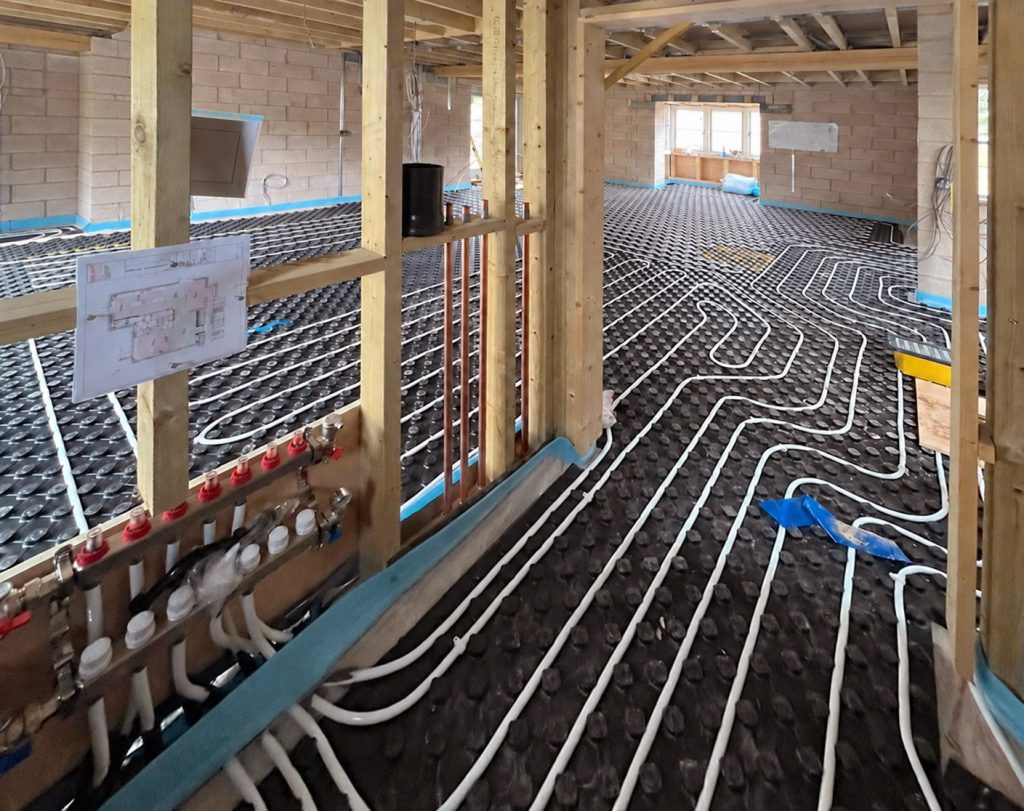
If you’re planning a heat pump installation and also considering underfloor heating, the two are a genuinely strong match, and understanding why can help you get the most out of both.
It comes down to flow temperature
A gas boiler typically heats water to 60–80°C to push around radiators quickly. A heat pump is at its most efficient producing water at a much lower flow temperature, usually 35–45°C. Underfloor heating is designed to run at exactly that range, 30–45°C, because the entire floor acts as a giant, low-intensity radiator, spreading gentle heat across a huge surface area rather than concentrating it in a small panel on the wall.
Why this pairing improves efficiency
A heat pump’s efficiency, measured as its coefficient of performance (COP), drops the harder it has to work to reach a higher flow temperature. Running at underfloor heating temperatures rather than pushing for radiator-level heat can be the difference between getting roughly four units of heat for every unit of electricity used, versus two and a half. That’s a meaningful difference on your energy bill.
What this means in practice
- New builds and extensions are the easiest fit, with pipes laid before the screed goes down and the whole system designed around the heat pump from day one
- Retrofits are achievable too, using low-profile systems over existing floors or pipework fitted between joists on suspended timber floors
- Radiators still work with heat pumps, just usually needing to be sized larger than a boiler-matched radiator, to compensate for the lower flow temperature
Getting the design right
The efficiency gains only show up if the heat pump and underfloor heating system are sized and designed together, factoring in your home’s actual heat loss, not fitted as separate, disconnected jobs. We design and install both together, so the numbers on paper translate into a genuinely lower running cost in your home.